
- Home > Blog > Wisdom Tooth When to Remove
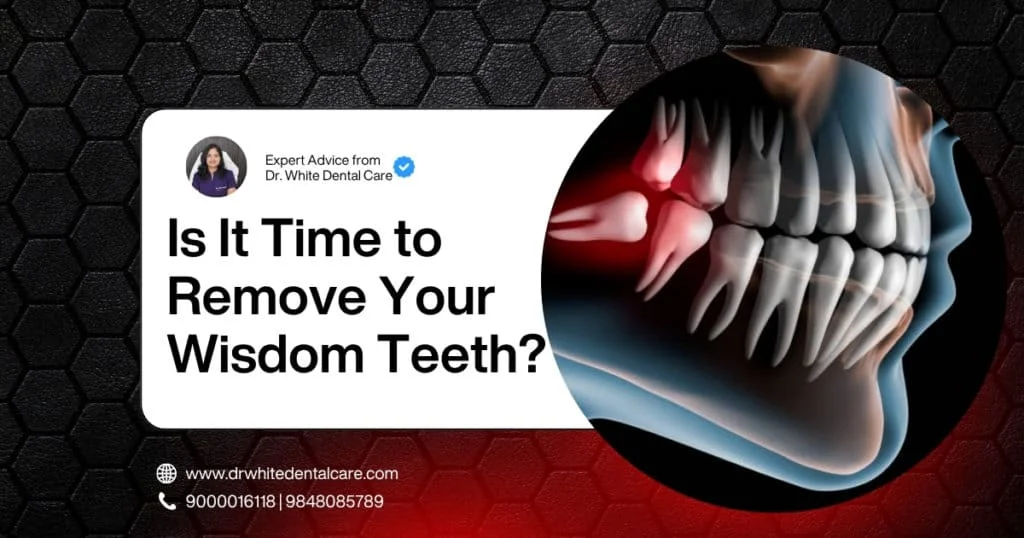
Wisdom Tooth When to Remove
Wisdom Tooth When to Remove — Complete Patient Guide
What Are Wisdom Teeth and Why Do They Exist?
Wisdom teeth, or third molars, usually appear between the ages of 17 and 25. They were once necessary for chewing tough, fibrous foods, but modern, smaller jaws often don’t have enough space for them.
Common issues include:
- Impaction: Trapped under gum or bone
- Misalignment: Pushing against neighbouring teeth
- Crowding: Affecting existing tooth alignment
- Infections: Partially erupted teeth trap food and bacteria
When these problems arise, extraction of wisdom teeth becomes the safest option. Dentists use digital X-rays or 3D imaging to evaluate each tooth and plan a precise, safe procedure.
The Growth Stages of Wisdom Teeth
| Stage | Description | Common Issue |
|---|---|---|
| Pre-eruption | Still developing inside the bone | Usually no symptoms |
| Partial eruption | The tooth breaks through the gum partly | Gum swelling, infection risk |
| Full eruption | Completely visible in the mouth | May cause food lodgment |
| Impacted | Stuck under gum or bone | Pain, swelling, cysts |
Signs You May Need a Wisdom Tooth Extraction
Many patients wonder: ‘How do I know when to have my wisdom tooth removed?’
Here are the most common signs:
- Pain or pressure near the back of your jaw
- Swollen or tender gums behind the last molar
- Difficulty opening your mouth fully
- Bad breath or unpleasant taste (possible infection)
- Repeated cheek biting or swelling near the ear
- Headaches caused by jaw tension
Ignoring these symptoms can lead to complications requiring surgical extraction and a longer recovery.
Complications If You Ignore a Problematic Wisdom Tooth
Leaving an impacted or infected wisdom tooth untreated can lead to:
- Tooth decay: Food easily gets trapped under the gums.
- Infection (Pericoronitis): Red, painful swelling around the gum flap.
- Crowding: Pressure from a growing wisdom tooth can shift other teeth.
- Cysts: Fluid-filled sacs that can damage the jawbone or nerves.
- Gum disease: Persistent inflammation due to poor cleaning access.
These problems often develop quietly, so a routine dental X-ray can detect issues early.
Extraction vs Observation — Which Is Right for You?
| Condition | Recommended Approach |
|---|---|
| Fully erupted and healthy | Observation |
| Repeated swelling or infection | Extraction |
| Impacted or pressing on a nearby tooth | Extraction |
| Before orthodontic treatment | Extraction |
| Older patients with no symptoms | Regular monitoring |

Complications If You Ignore a Problematic Wisdom Tooth
Many patients fear the idea of extraction, but with today’s technology, it’s a smooth and painless procedure.
- Diagnosis: Digital X-rays or CBCT scans show the exact position of the tooth.
- Anesthesia: The area is numbed completely — you won’t feel a thing.
- Tooth Removal: Depending on the case, the tooth is gently loosened or sectioned into smaller parts for easier removal.
- Cleaning & Closure: The area is disinfected and sutured for safe healing.
Painless and Precise: Modern Tools Make It Easy
Our oral surgeons in Madinaguda and Nizampet use advanced surgical handpieces and sterile instruments, ensuring minimal discomfort and quick recovery. Most extractions take less than 30 minutes.
Is Extraction of Wisdom Teeth Painful?
- During the Procedure
- Local anesthesia completely numbs the area, so you won’t feel pain during the extraction.
- In some cases, sedation or conscious anesthesia is used to help patients feel relaxed and comfortable throughout the procedure.
- You may feel mild pressure or movement, but this is normal and not painful.
- Immediately After Extraction
- Slight soreness, swelling, or tenderness around the extraction site is expected.
- Some patients notice minor bruising or stiffness in the jaw for a day or two.
- Your dentist will provide pain relief medications to manage discomfort effectively.
- Recovery Timeline
- Most patients return to normal daily activities within 24–48 hours after a simple extraction.
- Surgical or impacted tooth removal may require a slightly longer recovery, but pain remains manageable with proper care.
- Following post-extraction instructions — like using ice packs, eating soft foods, and avoiding strenuous activity — helps speed up healing.
- Long-Term Comfort
- Modern extraction techniques at Dr White Dental Care in Madinaguda and Nizampet focus on minimizing trauma to surrounding tissues, reducing post-operative pain.
- Most patients report that the procedure is far less painful than expected, and the relief from chronic pressure, swelling, or infection is immediate.
- Tips for a Comfortable Experience
- Schedule your extraction at a time when you can rest afterward.
- Follow all aftercare instructions provided by your dentist.
- Maintain oral hygiene to prevent infection and promote faster healing.
In short, while the idea of tooth removal can sound intimidating, wisdom tooth extraction is generally painless, especially when performed by experienced dental specialists using modern techniques. The small, temporary discomfort after surgery is far outweighed by the long-term relief and oral health benefits.
Wisdom Tooth Removal Healing Process
| Day | What Happens | Care Tips |
|---|---|---|
| 1–2 | Mild swelling, light bleeding possible | Apply ice packs, rest |
| 3–5 | Swelling peaks then reduces | Eat soft foods, take medication |
| 6–10 | Healing tissue forms | Rinse with warm salt water |
| 11–14 | Normal function returns | Resume gentle brushing |
Do’s and Don’ts After Wisdom Tooth Extraction
| Do’s | Don’ts |
|---|---|
| Use a cold compress | Don’t smoke or use straws |
| Eat soft foods | Avoid spicy or crunchy foods |
| Keep your head elevated while sleeping | Don’t poke or touch the wound |
| Take prescribed medicines | Don’t skip your follow-up visit |
Wisdom Tooth Extraction Side Effects
A little swelling or discomfort is normal after extraction. Here’s what you might notice:
- Mild bleeding: Bite gently on gauze for 20–30 minutes.
- Swelling: Use an ice pack for 10 minutes at a time.
- Stiffness: Gentle mouth-opening exercises after 48 hours help.
- Bad breath: Temporary and improves with saltwater rinses.
If pain increases after 3 days or you notice pus or a foul taste, visit your dentist immediately — it could be a dry socket or infection.
Wisdom Tooth Extraction Cost
| Type of Extraction | Approx. Cost (₹) |
|---|---|
| Simple extraction | ₹1,500 – ₹3,000 |
| Surgical extraction | ₹3,000 – ₹6,000 |
| Impacted tooth removal | ₹5,000 – ₹10,000 |
At Dr White Dental Care, we ensure transparent pricing with no hidden charges.
Some dental insurance plans may partially cover surgical extractions. Our team can help you check your eligibility.
Healing Stages and What’s Normal
Every mouth heals differently, but most patients recover fully within 10–14 days.
Normal signs:
- Mild swelling or tightness in the jaw
- Small bruising on the cheek
- Slight bleeding on the first day
Call your dentist if you notice:
- Persistent bleeding beyond 24 hours
- Fever or severe pain
- Numbness or pus discharge
At Dr White Dental Care, our post-extraction support ensures a smooth recovery with follow-up checks and care instructions.
Foods to Eat After Wisdom Tooth Removal
Choosing the right food after extraction helps your wound heal faster.
Recommended foods:
- Soups, dal, and khichdi
- Yogurt, curd rice, smoothies (no straw)
- Mashed fruits like banana or avocado
- Scrambled eggs, oatmeal, and porridge
Avoid: Chips, spicy food, hard meat, and carbonated drinks for at least a week.
Myths vs Facts About Wisdom Tooth Extraction
| Myth | Fact |
|---|---|
| Everyone must remove their wisdom teeth | Only problematic teeth need removal |
| Extraction is very painful | It’s painless with anesthesia |
| Removal affects memory | False — there’s no link |
| Older adults can’t undergo extraction | Safe at any age with proper evaluation |
Preventing Future Wisdom Tooth Problems
Preventive care helps avoid pain, infection, or complex procedures related to wisdom teeth. At Dr White Dental Care, we focus on early detection and proactive management:
- Regular Checkups: Visit your dentist every six months to monitor wisdom teeth growth.
- Good Oral Hygiene: Brush carefully, use antiseptic rinses, and floss around back molars.
- Digital X-Rays: Recommended between ages 16–20 to detect impacted or misaligned teeth early.
- Early Symptom Management: Address mild pain or swelling promptly to reduce complications.
- Expert Guidance: Personalised plans for oral care, diet, and monitoring wisdom teeth.
Following these steps ensures a healthy, pain-free mouth and reduces the risk of future wisdom tooth problems.
Why Choose Dr. White Dental Care for Wisdom Tooth Removal
Choosing the right dental clinic for wisdom tooth extraction is essential for a safe, comfortable, and successful procedure. At Dr. White Dental Care, we combine expertise, advanced technology, and patient-centered care to make your experience as smooth as possible:
- Experienced Oral Surgeons
- Our team consists of highly trained oral surgeons with years of experience in tooth extraction of wisdom teeth, including complex and impacted cases.
- Precision and care are priorities, ensuring minimal discomfort and faster recovery.
- Advanced Imaging for Accuracy
- We use digital X-rays and 3D imaging to accurately assess tooth position, jawbone structure, and potential complications.
- This allows us to plan safe and effective extractions tailored to your specific needs.
- Sedation and Comfort Options
- For patients who experience dental anxiety, we offer sedation options to make the procedure relaxing and stress-free.
- Modern anesthesia ensures that wisdom tooth removal is virtually painless.
- Transparent and Affordable Pricing
- We provide clear, upfront costs for all types of wisdom tooth extraction, including simple, surgical, and impacted procedures.
- Patients can also check dental insurance coverage for wisdom tooth extraction cost in India with our support.
- Convenient Locations
- Our clinics in Madinaguda and Nizampet make it easy for patients across Hyderabad to access top-quality care.
- Same-day appointments are often available, helping you address problems quickly.
- Focus on Long-Term Oral Health
- From diagnosis to recovery, our team prioritizes your comfort, safety, and overall oral health.
- We provide personalized aftercare guidance, ensuring a smooth wisdom tooth extraction recovery and minimal risk of side effects.
By choosing Dr White Dental Care, you’re not just getting a tooth removed — you’re getting a comprehensive, patient-focused approach to oral health that ensures comfort, precision, and peace of mind.
Conclusion
Wisdom teeth often begin with subtle signs, a dull ache, slight swelling, or pressure at the back of your mouth. While these symptoms may seem minor, ignoring them can lead to infections, tooth misalignment, or more complex extraction procedures down the line.
Early evaluation makes all the difference. By examining your wisdom teeth promptly, our team can determine whether they require removal or just careful monitoring. Addressing issues early ensures that the procedure is simpler, virtually painless, and more cost-effective, while minimizing complications and speeding up recovery.
At Dr White Dental Care, our experienced specialists in Madinaguda and Nizampet focus on your comfort and safety. With modern diagnostic tools, gentle extraction techniques, and personalized aftercare guidance, we make every wisdom tooth procedure stress-free and efficient.
Don’t wait for discomfort to escalate. Take the first step toward a healthier, pain-free smile today.
FAQ'S
Signs that a wisdom tooth may need removal include pain, swelling, difficulty opening your mouth, bad breath, recurring infections, or pressure on neighboring teeth. A dentist can confirm with digital X-rays or 3D imaging.
During pregnancy, avoid strong pain medications unless prescribed by your doctor. You can use cold compresses, gentle saltwater rinses, and soft foods. Always consult both your dentist and obstetrician before any treatment.
Yes. Impacted or infected wisdom teeth can cause referred pain, which may feel like it’s coming from the ear or jaw. If you experience ear pain with jaw discomfort, see a dentist promptly.
Wisdom teeth can be safely removed at almost any age, but extractions are generally simpler in younger adults. Older patients may experience slightly longer recovery or more complex procedures due to denser bone.
Not all wisdom teeth require removal. If the teeth are healthy, fully erupted, and not causing problems, dentists may monitor them regularly with checkups and X-rays.
Untreated wisdom teeth can lead to infections, gum disease, tooth decay, cysts, crowding, or damage to adjacent teeth. Regular monitoring is crucial to avoid complications.
There’s no strict age limit. Wisdom teeth removal can be performed safely in older adults, but the procedure may be more involved, and recovery can take longer.
Like any surgical procedure, extraction carries some risks, such as infection, dry socket, or temporary nerve irritation. However, modern techniques, experienced oral surgeons, and proper aftercare make the procedure very safe.
Dentists generally prefer to preserve teeth when possible. Removal is only recommended when there’s pain, infection, misalignment, or risk to neighboring teeth. Unnecessary extractions are avoided to protect overall oral health.
Wisdom teeth themselves do not cause seizures. However, severe infections or high fever related to dental problems may trigger complications in rare cases. Proper dental care prevents these risks.
Medically Reviewed by Dr White Dental Care – Clinical Advisory Team
Written by Dr SriLakshmi, Consultant Dentist
13+ Years Clinical Experience