Is Chewing Gum Good for Your Teeth?

If you choose the right type, chewing gum can support daily oral hygiene. Sugar-free gum, especially the kind that contains xylitol, helps remove food debris, boosts saliva flow, improves pH balance in the mouth, and reduces the risk of cavities. It can be a useful habit for people who experience dry mouth, frequently snack, or struggle with acidity after meals.
Chewing gum is part of many daily routines. It boosts alertness, freshens breath, and helps us stay focused. But it also raises a common question: is chewing gum good for your teeth? The answer is yes when you choose the right type. Sugar-free gum can increase saliva flow, reduce acidity, and support the mouth’s natural cleaning process.
Patients who visit our dental clinic in Madinaguda or consult a dentist near Nizampet often ask whether chewing gum actually benefits their teeth. When used correctly, sugar-free options can be a simple and effective addition to everyday oral care.
This guide explains how gum works, the benefits it offers, and how to select options that help protect your teeth and gums. A small habit can make a real difference in keeping your mouth healthier.
Key Takeaways
✓ Sugar-free gum helps neutralise acids and protects your enamel.
✓ Xylitol gum reduces harmful bacteria and supports cavity prevention.
✓ Chewing gum after meals helps clear food debris and freshen breath.
✓ Individuals with dry mouth can benefit from increased saliva production.
✓ Not everyone should chew gum; patients with TMJ issues, young children, or those wearing certain dental appliances should avoid it.
✓ Chewing gum is a helpful add-on to oral hygiene, but it cannot replace brushing and flossing.
Why Do People Chew Gum?
Chewing sugar-free gum can support healthier teeth and gums by increasing saliva flow. This extra saliva helps clear food particles, neutralise acids, and create a cleaner environment in the mouth. The ADA also reports that sugar-free gum can reduce plaque levels and support enamel strength. For the best results, choose sugar-free gum with xylitol and use it after meals. It’s a helpful addition to your routine, but it should never replace brushing and flossing.
People chew gum for different reasons:
While these reasons are common, very few realise that gum chewing also plays a role in oral hygiene habits.
Is Chewing Gum Good for Your Teeth?
The simple answer: yes, if it’s sugar-free. Sugar-free gum can contribute to:
✓ Fewer cavities
✓ Better saliva flow
✓ Reduced dry mouth and better pH balance
✓ Lower bacterial levels
But to understand how this works, we need to look at saliva.
How Chewing Gum Helps Oral Health
Saliva is one of the most underrated protectors in your mouth. When you chew gum, the muscles in your jaw stimulate the salivary glands. This boost in saliva supports oral health in many ways.
How Saliva Protects Teeth
Saliva helps:
Neutralise acids
After meals, bacteria break down food particles and release acids. These acids weaken enamel and raise the risk of cavities. Chewing gum helps your mouth produce more saliva, which naturally neutralises these acids.
Support enamel protection
Strong enamel is your tooth’s first line of defence. Saliva contains calcium and phosphate minerals that help remineralise the enamel.
Reduce food debris
Chewing gum is not a substitute for brushing, but the increased saliva helps wash away small food particles.
Prevent bacterial growth
A well-balanced pH makes it harder for harmful bacteria to thrive.
Reduce dry mouth
This is especially helpful for people with dehydration, certain medications, or medical conditions.
Benefits of Sugar-Free Gum
Not all gum is good for you. Sugar-free gum is the only type recommended by dentists. Here’s why:
Helps prevent cavities
Lowers acid levels, increases saliva, and decreases plaque buildup.
Better pH balance
A neutral pH stops enamel erosion and gum irritation.
Reduces plaque formation
Stimulated saliva helps wash away plaque-forming bacteria.
Protects enamel naturally
The minerals in saliva help strengthen weakened enamel.
Freshens breath
Dry mouth is a significant contributor to bad breath. Chewing gum helps by keeping the mouth moist.
Helps digestion indirectly
Gum triggers digestive enzymes, reducing acidity and bloating.
Stress relief
This doesn’t directly relate to teeth, but lower stress means less teeth grinding during the day.
Sugar-Free Gum vs Regular Gum
Not all chewing gum is the same. The difference between sugar-free gum and regular gum is significant, especially when it comes to oral health.
Which one should you choose? Always choose sugar-free, dental-approved chewing gum, especially one with xylitol, if you want real oral health benefits.
What Is Xylitol?
Xylitol is a natural sweetener that tastes like sugar but works very differently in the mouth. It does not contribute to tooth decay and is widely used in dental-friendly products such as sugar-free gum, toothpaste, and mints.
Why Dentists Recommend Xylitol Gum
✓ Helps limit harmful bacterial growth
✓ Reduces how sticky plaque becomes
✓ Supports overall cavity prevention
✓ Safe for individuals with diabetes
✓ Does not cause rapid increases in blood sugar
How Xylitol Works
Cavity-causing bacteria cannot use xylitol as a food source. When they attempt to process it, they weaken and eventually die. Over time, this reduces the number of harmful bacteria in the mouth and supports healthier teeth and gums.
If you prefer chewing gum that benefits your oral health, choose a sugar-free option made with xylitol. It’s one of the most effective ingredients for protecting your smile.
Chewing Gum After Meals: Does It Help?
Yes. Chewing gum right after meals:
✓ Neutralises acids from food
✓ Increases saliva for 20–30 minutes
✓ Reduces food debris
✓ Promotes better digestion
It’s especially helpful after:
Patients at our family dental clinic in Madinaguda often say that chewing gum after meals helps keep their mouths fresher throughout the day.
Does Chewing Gum Clean Your Teeth?
It does not replace brushing or flossing, but it helps in small ways:
✓ Removes loose debris
✓ Reduces acidity
✓ Decreases bacterial buildup
✓ Keeps teeth cleaner between meals
Remember: gum = support. Brushing + flossing = essential. No gum can remove plaque like brushing can.
Is Chewing Gum Good for Your Gums?
Chewing gum gently stimulates the soft tissues in the mouth, which increases blood flow. This helps:
✓ Maintain healthier gums
✓ Reduce dryness
✓ Improve oxygen levels in tissues
For early gum irritation, sugar-free gum can provide relief by keeping the mouth moist. Bleeding or swollen gums need a dentist’s check; read our guide to gingivitis.
How Gum Chewing Supports Cavity Prevention
Here’s why chewing gum is helpful for cavity prevention:
1. Gum increases saliva
2. Saliva increases enamel minerals
3. Enamel minerals repair weak spots
4. pH balance improves
5. Bacteria struggle to survive
6. Plaque reduces
This is why many dentists in Hyderabad include sugar-free gum in their oral hygiene recommendations.
Gum Chewing for Fresh Breath
Bad breath often comes from:
Chewing gum helps in two ways: quick freshening through flavour, and long-term freshness through increased saliva and reduced bacteria.
Patients with chronic dry mouth often notice major relief by using sugar-free gum between meals.
Choosing the Right Dental-Approved Chewing Gum
Selecting the right type of chewing gum can make a meaningful difference to your oral health. Here are the key points to consider:
Sugar-free
This is the most important requirement. Sugar-free gum reduces the risk of cavities because it does not feed harmful bacteria in the mouth. It also encourages saliva flow, which helps clean and protect your teeth.
Xylitol
Look for chewing gum that contains xylitol. This natural sweetener actively supports cavity prevention by reducing the number of bacteria that cause tooth decay.
ADA or IADR approval
In some countries, you may find sugar-free gums that carry approval from dental associations such as the American Dental Association (ADA) or the International Association for Dental Research (IADR). These approvals indicate that the product meets certain safety and effectiveness standards.
Avoid sweeteners that cause discomfort
Some gums contain artificial sweeteners such as aspartame, sucralose, or saccharin that may irritate the stomach in sensitive individuals. Gum sweetened with xylitol or sorbitol is generally a safer option.
Avoid hard-crystal gums if you have sensitive teeth
Some whitening or textured gums contain hard crystals that can cause discomfort for people with sensitive teeth or enamel wear. If you experience sensitivity, choose a smoother, gentler sugar-free gum.
Who Should Avoid Chewing Gum?
While sugar-free chewing gum is safe for most people, a few groups should be cautious:
People with jaw pain or TMJ issues
Chewing can strain the jaw joint. If you have TMJ problems, regular gum chewing may worsen pain or cause clicking and stiffness.
People wearing certain dentures
Chewing gum can loosen or dislodge partial dentures or plates that rely on suction. Always check with your dentist if you’re unsure.
Patients with braces
Some orthodontic appliances are safe with gum, while others are not. Gum can get stuck in brackets and wires, so follow your orthodontist’s specific recommendations.
Children under 5
Young children may accidentally swallow gum or choke on it. It’s best to avoid giving them chewing gum of any kind. For safer habits, read 10 ways to protect your child’s teeth.
People who bite down aggressively
If you tend to bite hard or clench your teeth, chewing gum can add extra stress on your jaw and teeth, leading to fractures or soreness.
If you experience any pain, tightness, or discomfort while chewing gum, it’s best to stop and consult your dentist for guidance.
Do’s and Don’ts of Chewing Gum
A quick, handy guide for patients:
Do’s
✓ Choose sugar-free gum only
✓ Chew for 10–20 minutes after meals
✓ Drink water while chewing to help with debris removal
✓ Choose xylitol-based gum for better cavity protection
✓ Use gum as a refreshing option when brushing is not possible
Don’ts
✗ Don’t chew gum if you have jaw pain or TMJ symptoms
✗ Don’t replace brushing and flossing with gum
✗ Don’t give gum to children under 5
✗ Don’t chew if you have dentures or orthodontic appliances that gum may loosen or stick to
✗ Don’t choose gum with artificial sweeteners if they upset your stomach
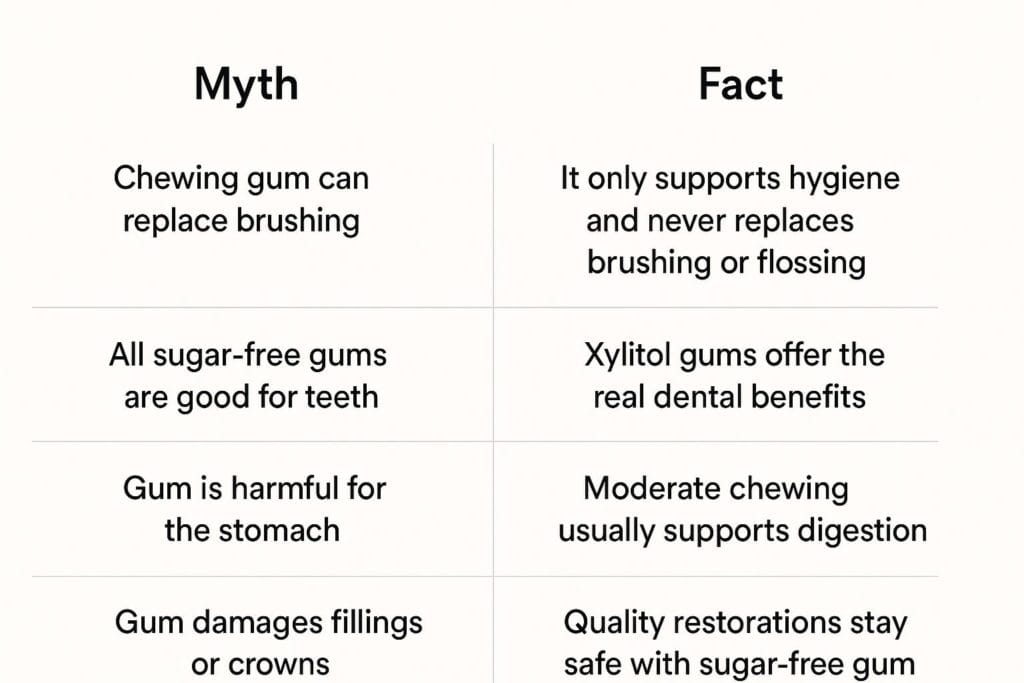
Myths vs. Facts About Chewing Gum
Is Chewing Gum Safe Every Day?
Daily chewing gum can be safe for most people, as long as the gum is sugar-free and used in moderation. It has benefits such as reducing oral acidity, keeping saliva flowing, and freshening breath. But like any habit, it has limits.
When daily chewing is safe
✓ You use sugar-free gum only
✓ You chew for 10–20 minutes after meals
✓ You feel no soreness or tightness in your jaw
✓ You don’t wear appliances that gum may stick to
✓ You use gum for mild dry mouth or bad breath
When to reduce usage
• You chew for long periods throughout the day
• You rely on gum instead of brushing or flossing
• You get headaches or tenderness near the jaw joint
• You are sensitive to artificial sweeteners
Signs you may be chewing too much
• Jaw clicking or popping
• Pain near the temples
• Tension in the cheeks or jaw
• Mild tooth sensitivity
• Fatigue while opening or closing your mouth
Advice for TMJ patients
People with TMJ dysfunction should avoid gum unless their dentist specifically approves it. Chewing creates repetitive stress on the jaw joint, which can worsen inflammation. If you have TMJ, stick to other freshening options such as water rinsing or sugar-free lozenges.
Best Gum Options in India
You can look for:
Always check labels before buying.
What Dentists Recommend in Hyderabad
If you visit a dental clinic in Madinaguda or a dentist near Nizampet, you’ll likely hear the same advice:
✓ Sugar-free gum is safe
✓ Xylitol is beneficial
✓ Gum chewing helps balance saliva
✓ It’s a great add-on to oral hygiene routines
People in Hyderabad often consume tea, coffee, and spicy foods, which increase acidity. Chewing gum helps neutralise acids and maintain fresher breath throughout the day.
Conclusion
Chewing gum won’t replace your toothbrush, but it can support your daily oral hygiene in meaningful ways. Whether you want fresher breath, better pH balance, fewer cavities, or strong enamel, the right sugar-free gum can help.
If you choose xylitol gum and use it after meals, you’ll notice a real difference in your oral health.
If you have concerns about cavities, gum issues, sensitivity, or dryness, a dental checkup is always the safest step.
Book your appointment today
Let us help you maintain a healthier, brighter smile.
Frequently Asked Questions About Chewing Gum
Is it safe to chew sugar-free gum every day?
Yes, daily chewing is generally safe as long as the gum is sugar-free and used in moderation. If you experience jaw discomfort, limit use and consult your dentist.
Does chewing gum help prevent cavities?
Sugar-free gum, especially xylitol gum, can help reduce cavity risk by increasing saliva flow and lowering acid levels in the mouth.
Can chewing gum replace brushing and flossing?
No. Chewing gum is only an additional hygiene aid. Brushing twice a day and flossing daily are still essential.
Is xylitol safe for regular use?
Yes. Xylitol is a dentist-approved sweetener that helps control harmful bacteria and is safe for most adults and children above the age of five.
Is chewing gum suitable for children?
Children above the age of five can use sugar-free gum under supervision. Younger children may choke and should avoid gum.
Can chewing gum cause jaw pain?
Chewing for long periods can strain the jaw muscles. People with TMJ issues should avoid gum unless advised otherwise.
Can I chew gum if I wear braces?
It depends on the type of braces. Some orthodontic systems allow sugar-free gum, while others do not. Always follow your orthodontist’s guidance.
Does chewing gum whiten teeth?
Chewing gum does not whiten teeth, but it can help reduce surface stains by increasing saliva flow.
Is sugar-free gum safe for diabetics?
Yes. Sugar-free and xylitol-based gums do not raise blood sugar levels, making them suitable for most diabetic patients.
Does gum help with dry mouth?
Yes. Chewing stimulates saliva, which provides relief from dry mouth and helps protect tooth enamel.
Can chewing gum damage dental work?
Some restorations or dentures may loosen with gum. Patients with crowns, bridges, or partial dentures should choose softer sugar-free gum and chew gently.
Is regular gum harmful?
Yes. Regular gum contains sugar that feeds harmful bacteria, increases acid production, and raises the risk of tooth decay.
How long should I chew gum?
Most dentists recommend chewing for 10–20 minutes after meals to support saliva production and acid neutralisation.
Can gum reduce bad breath?
Sugar-free gum helps control temporary bad breath by stimulating saliva and reducing dryness. It does not treat underlying causes like gum disease.
Is chewing gum okay during fasting hours?
Rules vary depending on the type of fasting. From a dental perspective, sugar-free gum can help manage dry mouth, but follow your specific fasting guidelines.
Does chewing gum help remove food particles?
Yes. Chewing gum helps loosen and clear food debris, making it useful when brushing is not immediately possible.
Can chewing gum trigger headaches?
Excessive chewing may strain the jaw muscles and lead to headaches in some individuals. Reduce usage if this happens.
Is it okay to chew gum after dental treatment?
It depends on the procedure. Avoid gum after extractions, implants, or major dental work. Follow your dentist’s instructions.
Which gum is best for dental health?
Xylitol-based sugar-free gum is the most effective option for cavity prevention and enamel protection.
How many pieces of xylitol gum should I chew in a day?
Most studies recommend 3–5 pieces per day, spaced after meals, for effective cavity protection.